By Matthew Baring-Gould, Kingscliff-based drainage plumber. Servicing Tweed Heads for 4 years. 5.0 stars across 173 Google reviews. Licensed NSW 383340C and QLD 15036450. ABN 74 605 392 348.
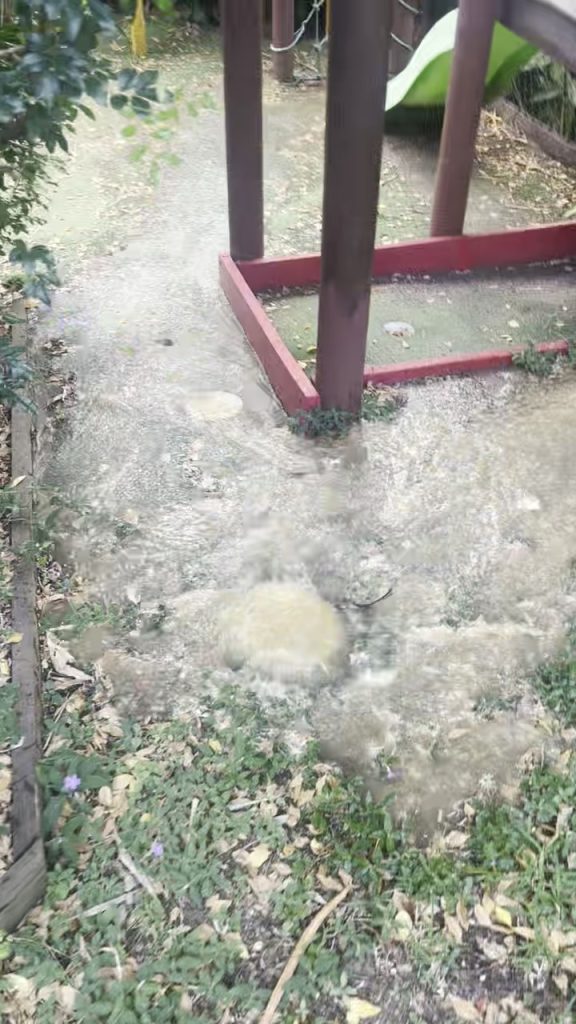
Hillside home in The Gap, Brisbane. A river of water tracking through under the foundations. External perimeter drainage system diverting all water around the property to the back stormwater line. Water never reaches the foundation again.
What the customer called us for
Groundwater was tracking down the hill and running through under the house. The previous owners had cobbled together a makeshift drain inside the subfloor to channel water out, which is the opposite of what you want (you want the water never to get in). The owner knew it was wrong, but did not know what the right fix looked like, and called us because of our drainage reviews.
What we found when we got there
The property is on a hill. Groundwater and surface runoff from above was hitting the retaining wall and footings with nothing stopping it. The wall itself had multiple cracks that were letting water through directly, and the ground above the wall was flat (not sloped away), so every rainfall sat right on top of the footings.
Why we did it this way
Internal fixes (sump pumps, interior drains, waterproofing paint on the inside of the slab) only treat the symptom. The water is still arriving. The right fix on a hillside home is to intercept the water on the outside of the house before it ever reaches the foundation. That is what an external perimeter drainage system does: a trench with Aggie pipe at the base, running continuously around the property, taking any water that hits it and running it around and out to the stormwater line. Done once, done properly, done forever.
What we did on site
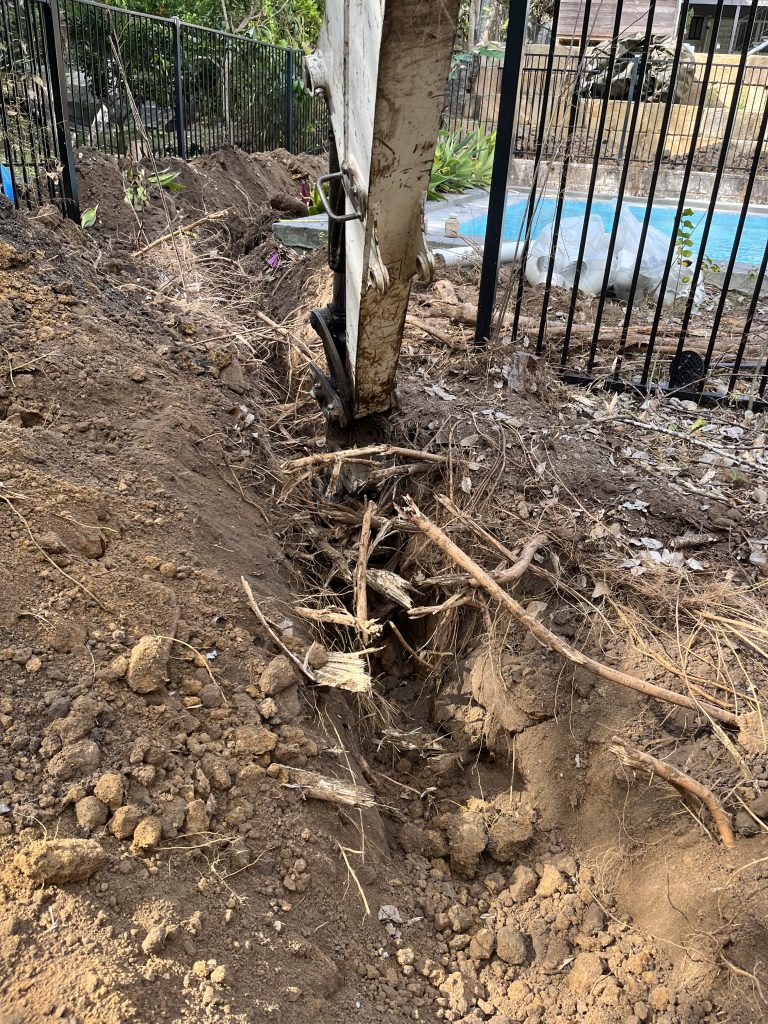
- Excavated the trench around the perimeter of the house.
- Pressure-washed the retaining wall and foundations so we could see every crack.
- Filled all cracks and holes in the foundation with rapid-set concrete.
- Waited for the concrete to cure.
- Applied three coats of waterproofing membrane across the exposed wall.
- Installed tunnel core (core-flute) against the waterproofed wall to protect it during backfill.
- Lined the full trench with geofabric cloth to separate the drainage media from the surrounding dirt.
- Laid Aggie pipe around the entire perimeter, connected into the existing stormwater line at the back of the property.
- Filled the trench with 20mm blue metal drainage gravel.
- Wrapped the geofabric back over the top of the gravel to form a continuous drainage sock.
- Backfilled with topsoil and reshaped the ground so surface water now falls away from the property, not toward it.
The result
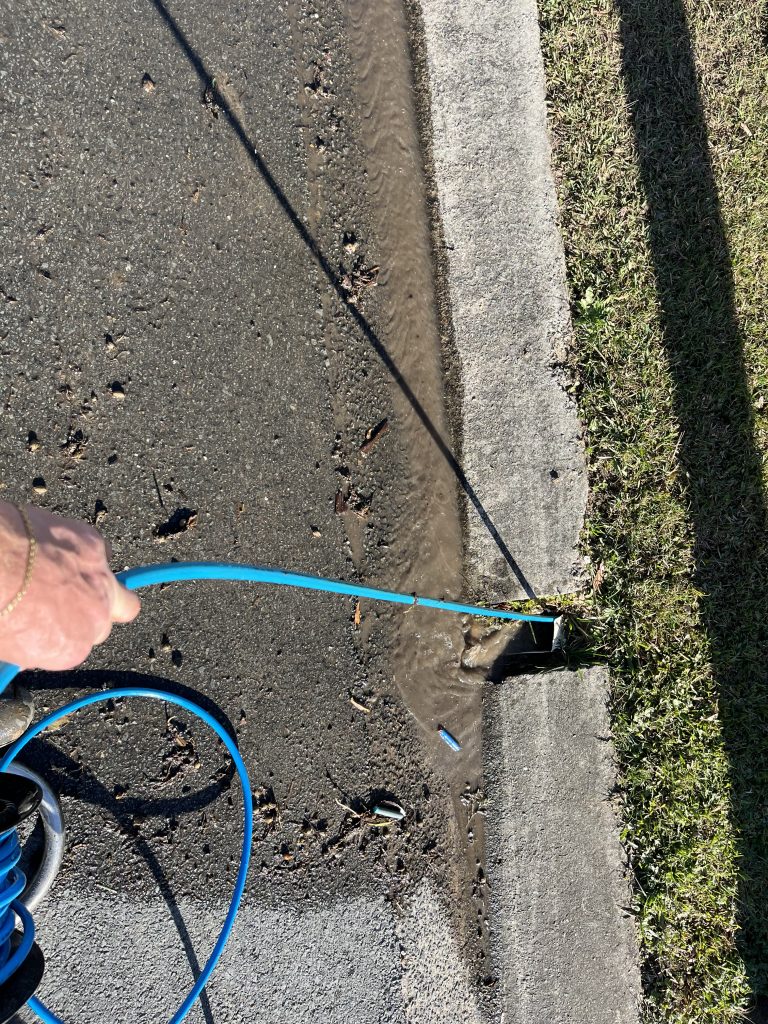
Any water that comes down the hill now hits the perimeter trench, falls through the stone, enters the Aggie pipe, runs around the full outside of the property, and exits at the back into the existing stormwater line. Nothing reaches the foundation. The subfloor stays dry. The makeshift internal drain is no longer needed.
If you have the same issue
If you are on a hillside home and seeing water under the floor, water tracking through the slab at a particular wall, or the previous owner has left you with an internal drain in the subfloor, the problem is almost always groundwater arriving at the foundation. The fix is external and perimeter-based. We cover Brisbane inner west, the Gold Coast, and the Tweed / Northern Rivers. Call Matty on 0447 188 394.
Customer names and addresses have been withheld. Individual results vary. Drain Masters Plumbing is licensed in NSW (383340C) and QLD (15036450).
Frequently asked
Can you do this without excavating around the house?
No. External perimeter drainage requires excavating a trench around the perimeter, down to the base of the foundation. There is no shortcut because the goal is to intercept water before it reaches the wall, which means the trench has to sit between the wall and the hillside.
What about just adding a sump pump inside?
A sump pump handles water that has already arrived at the foundation. On a hillside house with continuous groundwater pressure, a sump pump is treating the symptom while the water keeps hitting the wall from behind. External drainage removes the water before it reaches the wall.
How long does an external perimeter drainage install take?
Depending on access and the size of the property, usually 3 to 5 days. Longer on sites where machine access is restricted and the trench has to be dug by hand.
Browse all our case studies.
Residential, commercial, stormwater, sewer, drainage installs across Tweed Heads, the Northern Rivers, the Gold Coast and Brisbane. See the full collection →