
By Matthew Baring-Gould, Kingscliff-based drainage plumber. Servicing Tweed Heads for 4 years. 5.0 stars across 173 Google reviews. Licensed NSW 383340C and QLD 15036450. ABN 74 605 392 348.
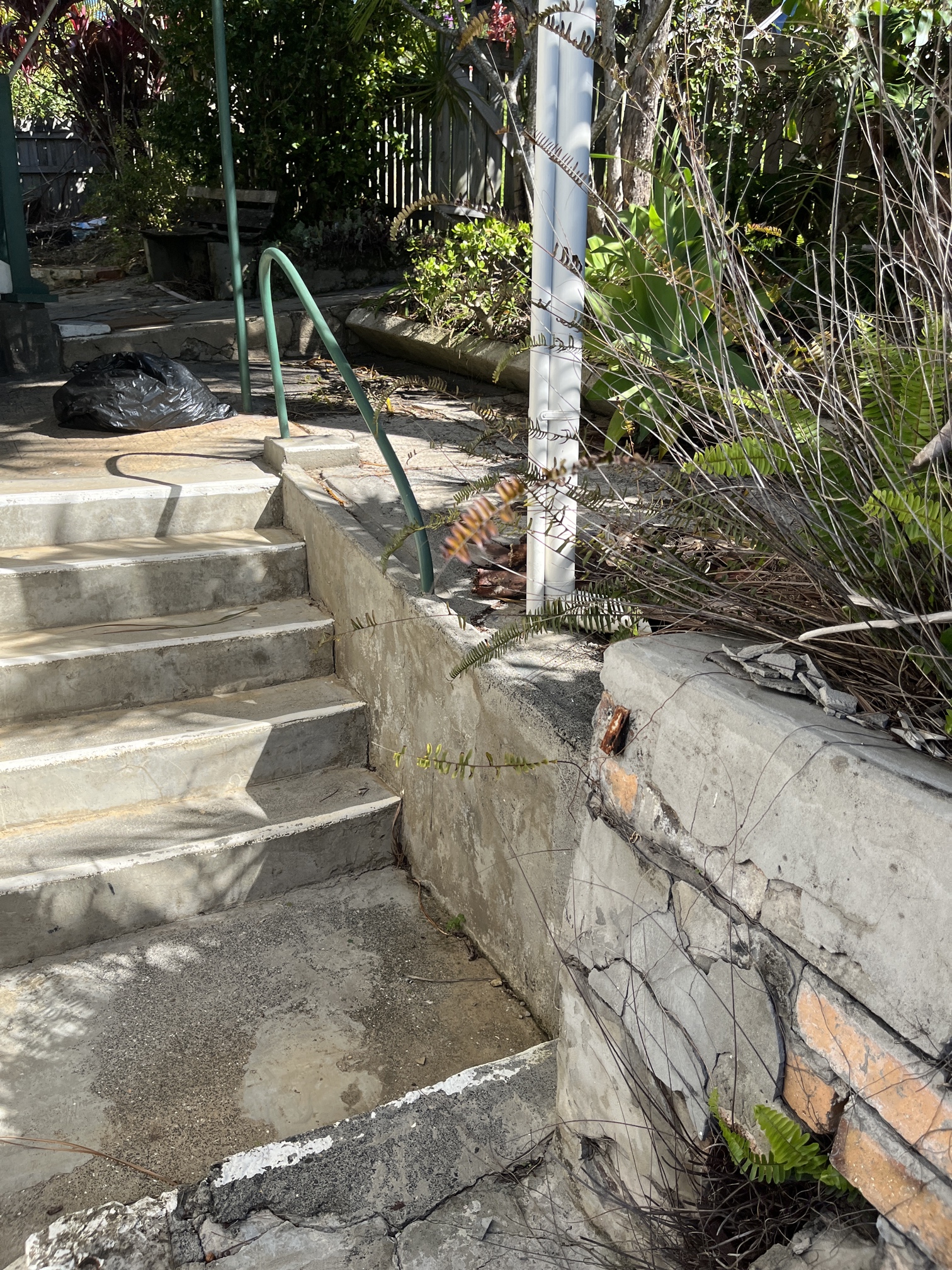
Large multi-stage drainage job on a Tweed Heads hillside. Vacuum excavation to cut a soak-away trench below the house footings, three coats of waterproofing on the back wall, 20mm blue metal drainage fill, a second soak trench up the left side to the top of the property, removal of boundary trees that were taking out the existing water and stormwater lines, replacement of the water line in 25mm blue-line poly and the stormwater in 100mm DWV PVC, demolition of a chicken coop and old concrete footpath, hydrojet of the right-hand stormwater line.
What the customer called us for
Owner called us out for serious groundwater issues on a Tweed Heads hillside. Water was coming through the hill from above and finishing up against the back of the house. They wanted a proper soak-away trench to divert the groundwater before it undermined the footings.
What we found when we got there
Classic hillside groundwater problem. No way to stop the water at the source (it was coming through the ground from higher up the hill), so the fix was all about redirection: catch the water in a soak trench before it reached the house, then route it down the side of the property. The yard also had boundary trees that had grown into the existing water and stormwater runs, a chicken coop sitting where the new trench needed to go, and an old concrete path blocking the works.
Why we did it this way
A soak trench is the right drainage design on a hillside site when the water is in the ground, not on the surface. You cut a trench downhill of the water source, line it with geofabric, drop aggie pipe in, and backfill with blue metal drainage gravel. The gravel holds the voids open, the aggie gives the water a fast lane, and the geofabric wrap stops fines from choking it. Three coats of waterproofing on the house wall is the belt-and-braces layer: drainage takes the bulk water pressure off the wall, waterproofing stops any residual moisture that still presses against it. Done together, the wall stops breathing groundwater.
What we did on site
- Vacuum excavated below the house footings and trenched underneath the house to create one large soak-away.
- Linked the under-house soak to a second soak trench up the left side of the property.
- Applied three coats of waterproofing on the back wall of the house.
- Installed socked aggie pipe along the trench and backfilled by hand with 20mm blue metal drainage gravel.
- Removed boundary trees whose roots had broken the existing water and stormwater lines.
- Trenched for new electrical conduit, replaced water line in 25mm blue-line poly and stormwater in 100mm DWV PVC.
- Removed the chicken coop and cut-and-filled the land into a more usable shape.
- Removed old concrete footpath.
- Hydrojetted the stormwater line on the right-hand side of the property.
The result
Groundwater now caught and diverted around the house. Back wall waterproofed, drained, and protected. Boundary trees gone, water and stormwater lines re-run with the right materials. Yard is usable again.
If you have the same issue
If you own a hillside property on the Northern Rivers or the Gold Coast and water is coming through walls, pooling under the house, or you can see moisture staining on brickwork at the back wall, that is groundwater not a roof leak. Fix it from the outside with a soak trench and a wall waterproof. Done properly once, it does not come back. Call Matty on 0447 188 394 or request a quote.
Customer names and addresses have been withheld. Individual results vary. Drain Masters Plumbing is licensed in NSW (383340C) and QLD (15036450).
Frequently asked
What is a soak-away trench?
A trench cut downhill of where the groundwater is coming from, lined with geofabric, filled with 20mm blue metal drainage gravel over a socked aggie pipe. The whole trench acts like a vertical French drain that catches the groundwater in the ground and routes it downhill in a controlled path.
Why vacuum excavate under the house instead of using a mini-excavator?
Under existing footings there is no room for a mechanical excavator and hitting a footing with a bucket is expensive. Vacuum excavation breaks the ground with water and air and sucks the spoil out through a hose, so we can work in tight spaces without risking the structure.
Why remove the trees instead of leaving them?
The tree roots had already taken out the existing water and stormwater lines. Leaving them means re-running the services and waiting for the next break. Removing them while the machine is already on site costs a fraction of a second mobilisation.
Browse all our case studies.
Residential, commercial, stormwater, sewer, drainage installs across Tweed Heads, the Northern Rivers, the Gold Coast and Brisbane. See the full collection →



