
By Matthew Baring-Gould, Kingscliff-based drainage plumber. Servicing Tweed Heads for 4 years. 5.0 stars across 173 Google reviews. Licensed NSW 383340C and QLD 15036450. ABN 74 605 392 348.
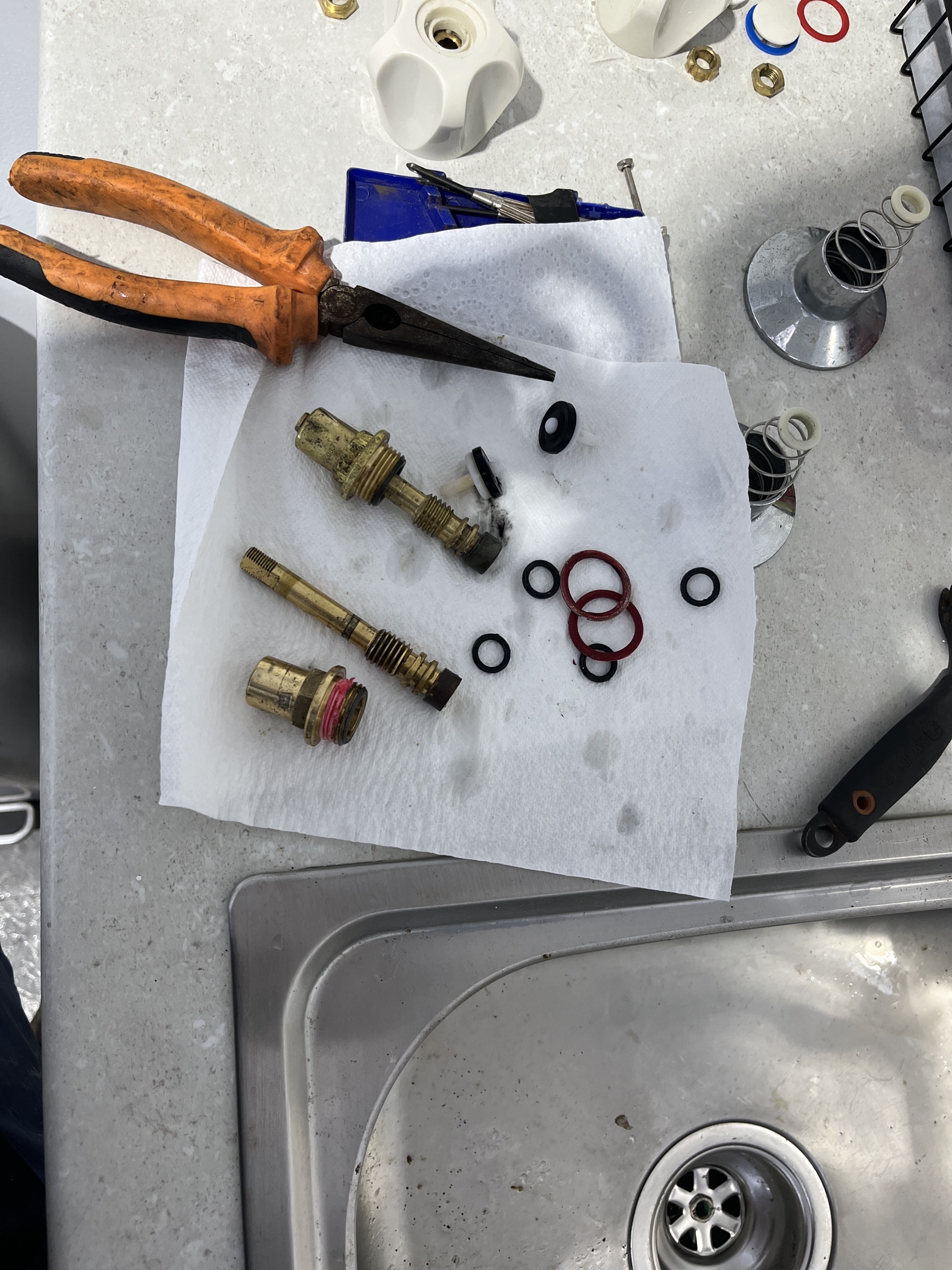
Service call to a Tweed Heads South commercial premises for a leaking kitchen tap. Isolated the water at the front of the premises, serviced both the hot and cold mixer tap halves. Found there was no hot water connected to the property at all. Turned water back on and tested. On the way out, noticed a leak at the male toilet caused by a perished flush cone rubber. Given the age of the toilet, recommended replacing the whole cistern. Also flagged the older cistern in the female toilet as a future-year replacement due to age and condition.
What the customer called us for
Commercial customer called us out for a leaking kitchen tap. Standard service call.
What we found when we got there
Serviced the hot and cold halves of the kitchen mixer. Both needed new seals. During the service, noticed the hot tap was not connected to any live hot water supply at all. Not our problem for this call, but worth flagging to the customer because they may have thought the hot water was working. On the way out, noticed a persistent leak at the male toilet. Investigated: the flush cone rubber (the one that seals the flush between the cistern and the pan) was perished. Given the age of the cistern, the right call is a whole-cistern replacement rather than just a flush cone swap.
Why we did it this way
Service callbacks for small leaks are low-value on their own. The real value is the opportunistic walk-through that catches the other three problems while we are on site. On this visit we fixed the kitchen mixer, flagged no-hot-water (customer problem to investigate why), fixed or quoted the flush cone leak, and flagged the female toilet for a future-year cistern replacement. Total time on site was still under two hours, but we gave the customer a maintenance plan for the next 12 months rather than just the fix they called for.
What we did on site
- Attended site and investigated the leaking kitchen tap.
- Isolated the water at the front of the premises.
- Serviced the hot and cold halves of the mixer with new seals.
- Noted the absence of hot water connected to the property.
- Turned the water back on and tested the kitchen mixer.
- Investigated the male toilet leak and found the perished flush cone rubber.
- Recommended whole-cistern replacement given the age of the toilet.
- Inspected the female toilet and flagged the cistern for future replacement.
- Cleaned up on completion.
The result
Kitchen mixer fixed and tested. Male toilet flush cone issue quoted. Female toilet cistern flagged for future replacement. Customer has a short list of planned maintenance.
If you have the same issue
If you run a commercial premises, use every service call as a maintenance audit. A plumber already on site for 90 minutes can walk the property in the last 15 and flag every emerging issue before it becomes a weekend-callout problem. Cheaper to plan replacements than to react to failures. Call Matty on 0447 188 394 or request a quote.
Customer names and addresses have been withheld. Individual results vary. Drain Masters Plumbing is licensed in NSW (383340C) and QLD (15036450).
Frequently asked
What is a flush cone rubber?
The large rubber seal that sits between the toilet cistern and the top of the toilet pan. When you flush, water passes from the cistern through the flush cone and into the pan. Over 10-20 years the rubber perishes and water starts leaking from the join between cistern and pan onto the floor.
Why replace the cistern instead of just the flush cone?
On a toilet over 15 years old, the flush cone is rarely the only part that is about to fail. The inlet valve, outlet valve, and the cistern-to-pan seal all age at similar rates. Replacing the whole cistern avoids the “call the plumber back in three months for the inlet valve” cycle. Economics usually favour the full replacement.
Why would a commercial kitchen not have hot water connected?
Most commonly, a hot water system has failed and the customer has been running without hot water temporarily. Or an isolation valve somewhere is closed. Or there is a planned refit coming and the hot water was intentionally disconnected. Not always our problem to solve, but worth flagging to the customer so they can address it.
Browse all our case studies.
Residential, commercial, stormwater, sewer, drainage installs across Tweed Heads, the Northern Rivers, the Gold Coast and Brisbane. See the full collection →



