
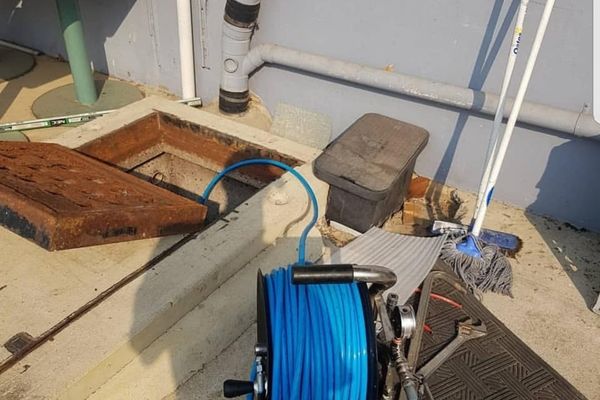
Are you looking at what you strongly suspect is a blocked stormwater drain? If so, it’s probably shown up at the worst possible time – during heavy rain, when water starts pooling in the yard, overflowing from grates, or backing up where it clearly shouldn’t. What a headache!
The good news is that not every stormwater issue is an instant emergency – and there are a few sensible steps you can take before calling in the pros.
In our guide, we’ll walk you through:
- What to check
- What you can safely try yourself
- And how to know when it’s time to stop pushing your luck and get professional help.
Step 1. Confirm it’s actually a stormwater blockage
Before doing anything else, make sure you’re dealing with stormwater and not sewer or wastewater or something else entirely.
Stormwater drains handle rainwater from roofs, yards, and driveways – not toilets or sinks.
The signs you’re dealing with blocked stormwater drains include:
- Water pooling around outdoor grates or pits
- Overflow during rain but draining slowly afterward
- No foul smells (stormwater blockages usually smell earthy, not sewer-like).
If it’s your toilets or internal drains that are backing up, this is a different issue altogether.
Step 2. Check for obvious surface blockages
Most stormwater problems start right at the surface:
- Lift any stormwater grates or pit lids
- Look for leaves, mulch, mud, or debris packed tightly near the opening.
This is the easiest place to start with a stormwater drain blocked with the usual gunk – especially after storms or windy weather:
- Remove what you can by hand or with gloves
- Flush the area gently with a hose to see if water begins to flow away.
Step 3. Inspect downpipes and roof runoff points
Blocked downpipes often masquerade as drain issues. Check that downpipes aren’t clogged with leaves or nesting debris and that water can flow freely into the stormwater system.
If water overflows at the base of a downpipe, the blockage may be nearby and still accessible without tools.
Step 4: Try controlled flushing with a hose
If the blockage isn’t visible, slow and steady flushing can sometimes dislodge light debris:
- Insert a hose into the stormwater opening
- Run water at moderate pressure.
When people ask us how to clean a blocked stormwater drain, we usually start with this – but it’s important not to force it. If water immediately backs up, stop – pressure won’t fix deeper problems and can make things worse.
Step 5. Avoid aggressive DIY tools
What do all of these have in common:
- Drain snakes?
- Makeshift rods?
- High-pressure attachments?
Yes, they can all unblock a stormwater drain in some circumstances. But they can all also damage stormwater pipes – especially older or shallow systems. Remember, stormwater lines are not built to the same standard as sewer pipes.
If you’re wondering how to clear a blocked stormwater drain safely, the answer is: only attempt what you can see and reach easily. Anything beyond that usually requires professional drain clearing equipment.
Step 6. Watch how the drain behaves after rain
Did the drain clear briefly but block again after the next downpour? That’s a definite sign of an underlying issue like:
- Sediment buildup
- Collapsed sections
- Tree root intrusion.
We deal with many blocked drains Gold Coast wide in exactly this condition – because our region’s heavy rain and sandy soil puts extra strain on drainage systems.
Step 7. Know when it’s time to call a plumber
Are any of these happening?:
- Water continuing to pool
- Water still overflowing
- The blockage returning shortly after a fix?
The time has come to stop experimenting. Professional plumbers use CCTV drain cameras, high-pressure jetting, and other pro-grade tools and techniques to locate and remove blockages properly – based on years of experience in the game.
Do you have the blocked drainage Tweed Heads locals often ask us for help about? On these properties, tree roots and silted pipes are especially common and usually can’t be resolved without specialist gear.
At this stage, it’s no longer about how to fix blocked stormwater drain problems yourself – it’s about preventing flooding and property damage.
Step 8. Prevent future stormwater blockages
Once things are flowing again, it’s time to turn your attention to prevention. Understanding how to prevent a blocked stormwater drain can save a lot of stress next wet season.
Good habits to consider include:
- Clearing leaves from gutters and pits regularly
- Keeping mulch and soil away from drain openings
- Checking pits after storms
- Scheduling occasional professional inspections if your property is tree-lined.
When you simply need expert help
If your stormwater drain keeps blocking or you’re dealing with active flooding, the friendly team of specialists at Drain Masters Plumbing can really help. We specialise in diagnosing and clearing stormwater blockages across Brisbane, the Gold Coast and Tweed Heads using CCTV inspections, high-pressure water jetting and other tools and techniques – with clear advice and fixed pricing.
Get in touch today and get your stormwater flowing properly again – before the next downpour hits!