By Matthew Baring-Gould, Kingscliff-based drainage plumber. Servicing Tweed Heads for 4 years. 5.0 stars across 173 Google reviews. Licensed NSW 383340C and QLD 15036450. ABN 74 605 392 348.
Pipe relining has had a big marketing push over the last few years and some plumbers now quote it on every job. Dig and replace is older and some plumbers still default to it. The honest answer is that both are the right fix for different jobs. Here’s how we decide.
What a no-dig reline actually is
A relining job installs a resin-impregnated felt sleeve inside your existing pipe, inflates it against the pipe wall, lets the resin cure, and leaves you with a smooth new pipe-inside-a-pipe. No excavation, no concrete cutting, no destroyed garden. The reline bonds to the host pipe and seals every join, which is why root ingress through old join cracks stops after a reline.
We don’t do the reline sleeve installation in-house. We sub it to a specialist who has been doing this specific product for over 25 years. The reason is quality: polyurethane relining is one of those jobs where the operator matters more than the equipment, and we would rather use the specialist than compromise. We clear the line, prep the pipe, locate the breaks, project-manage the reline, and warranty the result.
What dig and replace actually is
Dig and replace means excavating down to the failed pipe, cutting out the bad section, and laying new PVC in its place. Done well with a machine on an open block, it’s often cheaper than reline. Done on a tight site with a driveway or paving to cut, protect, and reinstate, the reinstatement cost usually swamps the pipe cost.
When reline is the right call
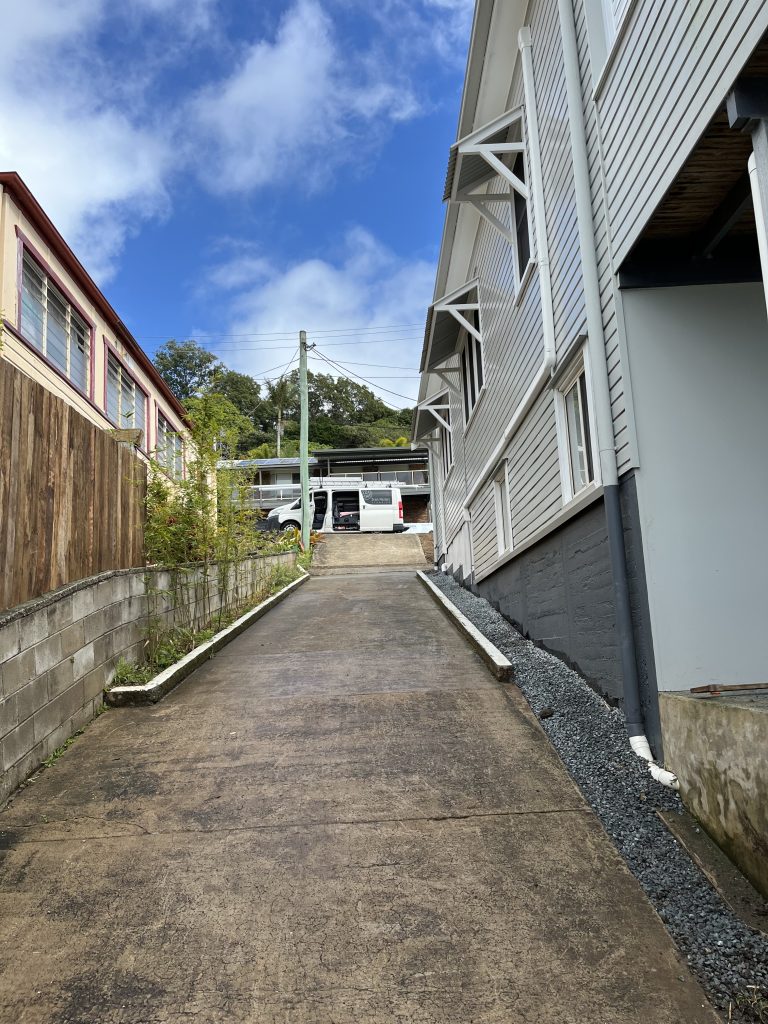
- No access for a digger. Pipe runs under the house, under a concrete driveway, under a slab, through tight side alleys where you can’t swing an excavator. This is the single biggest signal.
- The pipe is cracked but structurally intact. Terracotta joins cracked by tree roots are the textbook case. The pipe shape is still there; the sleeve bonds to it. See the Kingscliff reline for how this plays out.
- Landscaping or hardscaping to protect. Mature trees, retaining walls, pools, pavers. Reinstating these costs multiples of the dig itself. Reline avoids the cost entirely.
- Short time window. A full dig-and-replace with reinstatement on a tight site might be two or three days. Reline is often one day start to finish.
When dig and replace is the right call
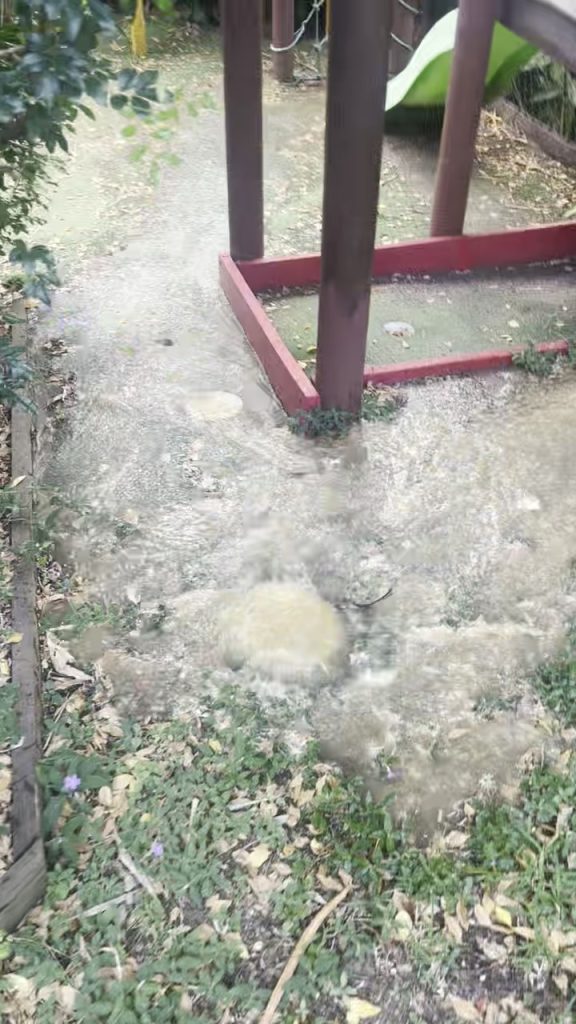
- The pipe has collapsed. If the pipe has deformed enough that the host wall won’t hold the sleeve shape, there is nothing for the reline to bond to. Dig and replace is the only route. We see this a lot with collapsed 90mm PVC stormwater on newer estates, see the Labrador job.
- Open-paddock access with a machine. Rural block, lots of room, easy excavation. The dig is cheap, reinstatement is a bit of dirt and grass. Dig-and-replace beats reline on cost in this scenario.
- Significant pipe deformation along a long run. Short deformed sections can sometimes be bridged by a reline, but if the whole run is deformed, the sleeve either won’t install correctly or won’t flow well after cure. Replace.
- Boundary or council-side faults. If the fault sits past your property boundary, the pipe is council’s responsibility and you shouldn’t be funding either option, see the Paddington case.
How we actually decide on your job
Four-step process on every sewer repair quote:
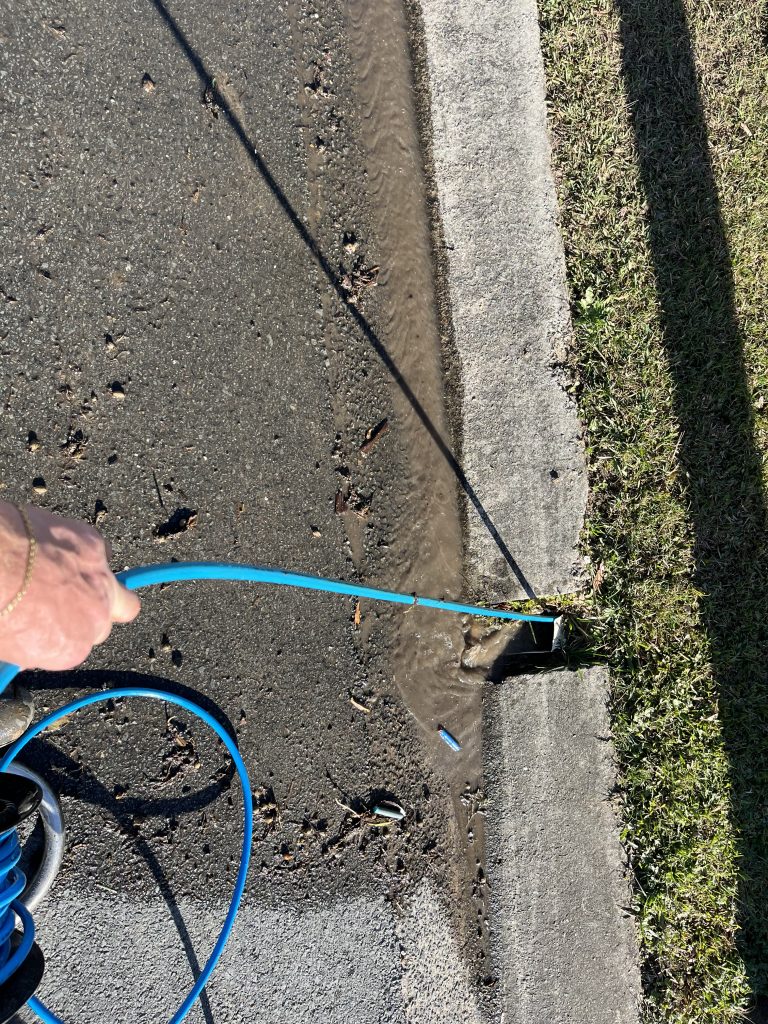
- Clear the immediate blockage with the hydrojet so you have a working drain while we figure out the repair.
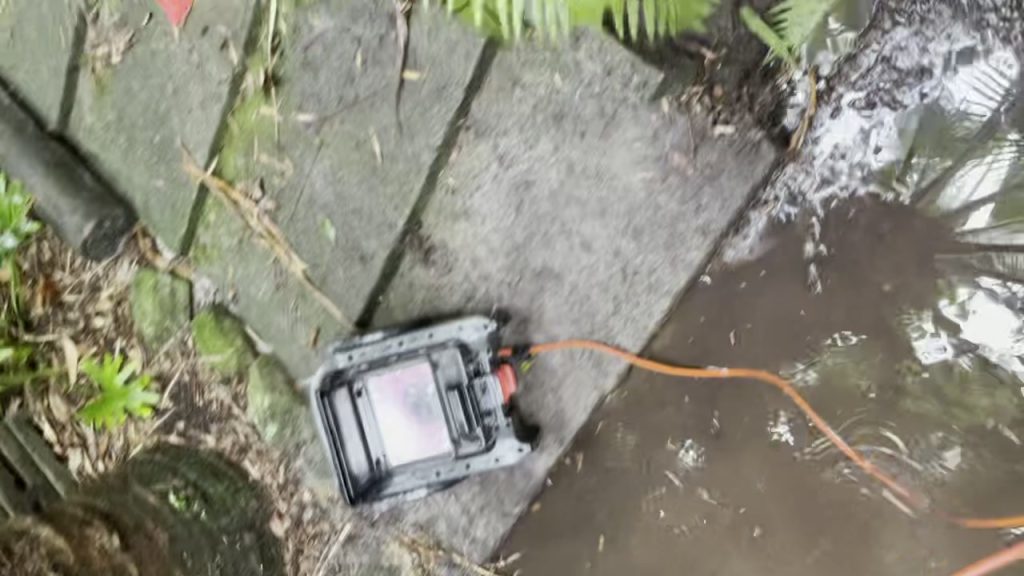
- CCTV camera the full line, end to end.
- Locate the exact fault position and depth with the camera head locator.
- Walk you through the footage on the monitor and present the two options with real numbers for your specific site.
If reline is clearly the right call we quote it. If dig-and-replace is cheaper for your site we tell you that too, even if it’s a smaller job for us. The point is a repair that fixes the problem permanently at the lowest honest cost. If a plumber only offers you one option without comparing both on your specific job, that’s a signal to get a second quote.
Pricing (approximate)
Pricing varies with pipe size, length, depth and site access, but as a general range for a residential sewer repair in Tweed, Kingscliff or the Gold Coast:
- Section reline, 1 to 3 metres: $2,500 to $5,000.
- Full house line reline: $6,000 to $12,000.
- Dig and replace, machine access, 2 to 4 metre section: $2,500 to $6,000 depending on reinstatement.
- Dig and replace, concrete cut and reinstate: typically $5,000 to $10,000.
These are indicative. The actual quote comes after the CCTV survey because the fault location and length drives everything.
If you need the real answer for your job
Book a camera inspection. $480 flat for the first hour, which includes the hydrojet to clear the line and the full CCTV survey. If repair work is quoted, that first hour comes off the repair job. Call Matty on 0447 188 394 or request a quote.
Customer names and addresses have been withheld. Individual results vary. Drain Masters Plumbing is licensed in NSW (383340C) and QLD (15036450).
Browse all our case studies.
Residential, commercial, stormwater, sewer, drainage installs across Tweed Heads, the Northern Rivers, the Gold Coast and Brisbane. See the full collection →