
Short version. If you’re on an older residential property between Tweed Heads and the Gold Coast and your stormwater keeps blocking after every big storm, there’s a decent chance the pipe underground is 90mm PVC. And there’s a decent chance it’s failing.
90mm PVC is fine for above-ground drainage runs. It is not built to hold its shape once it’s buried under a driveway, a garden bed, or a lawn that gets driven over. Over time it compresses. Sand and silt build up in the low spots. Then the line closes off completely.
We see this failure pattern week in, week out across the Gold Coast and Northern Rivers. Here’s what’s happening, how to tell if it’s happening to you, and what the fix looks like.
Why 90mm PVC fails underground
PVC stormwater pipe rated for standard duty comes in a range of diameters: 90mm, 100mm, 150mm, 225mm and up. The larger sizes have thicker walls, which is what gives the pipe its ability to hold shape under load.
At 90mm, the wall thickness is at the low end of the range. That works for hanging under a house or running across a roof space where nothing sits on the pipe. It does not work reliably when you bury the pipe under:
- A concrete driveway
- A pavered area or patio
- A vehicle turnaround or crossover
- A garden bed with heavy soil
- A lawn that gets mowed with a ride-on
The soil and load above the pipe compresses it. Not all at once. Over months and years. First the round pipe becomes oval, then it becomes flat. At the flat point, water can’t flow at velocity anymore. Silt and sand settle in the low spot. Every rain event adds more sediment. Eventually the pipe closes off completely and the whole line above it backs up.
How to tell if your stormwater has failed
You don’t need to dig it up to know. There are usually a few signs:
- Water ponds in the yard after rain and takes hours or days to clear. Healthy stormwater clears standing water within an hour of the rain stopping.
- The downpipe overflows from the top during medium rain, not just heavy storms. The pipe below can’t accept the flow.
- Blockages come back a week or a month after you clear them. You’ve cleared the sand at the surface pit but the failure point is further down the line.
- You see water tracking sideways under a slab or driveway. Stormwater that can’t flow through the pipe is finding its way out somewhere else, usually against your foundation.
- Damp patches on internal walls, especially on the low side of the house. Backed-up stormwater is pushing water into the wall footings.
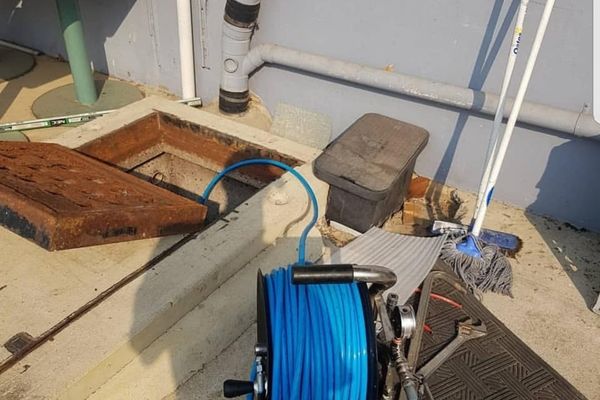
A CCTV drain camera confirms it in about 20 minutes. We put the camera down at an access pit, run it along the line, and mark the point where the pipe deformity starts. That location plus the pipe diameter tells us how big the fix needs to be.
What the fix actually looks like
For a failed 90mm run, the honest answer is: replace it, don’t just clear it. Clearing a deformed pipe buys you weeks. Replacing gets you 30+ years.
The replacement job typically covers:
- Locate the failure using CCTV camera + electronic pipe locator
- Excavate the trench along the failed section (usually 90mm goes in, 100mm or 150mm comes out depending on catchment)
- Cut and remove the collapsed pipe
- Lay the new upgraded stormwater pipe on a proper sand or aggregate bed
- Backfill with the right material for the load conditions above
- Reinstate lawn, garden bed or hardscape as needed
- Extend the run to the kerb, easement or council connection point if the old run was undersized
On smaller residential runs the job is a half-day. On bigger runs where we’re upgrading the whole property’s stormwater (which is often the right move if the whole system was undersized) it’s one to two full days.
Real example: recent Labrador job
Called out to a Labrador property in September 2026 for a blocked drain. The property was flooding.
We cleared what we could of the line, then put the camera down. Original stormwater on the property was 90mm PVC and it had compressed and collapsed at multiple points underground. Sand had built up wherever the pipe deformed.
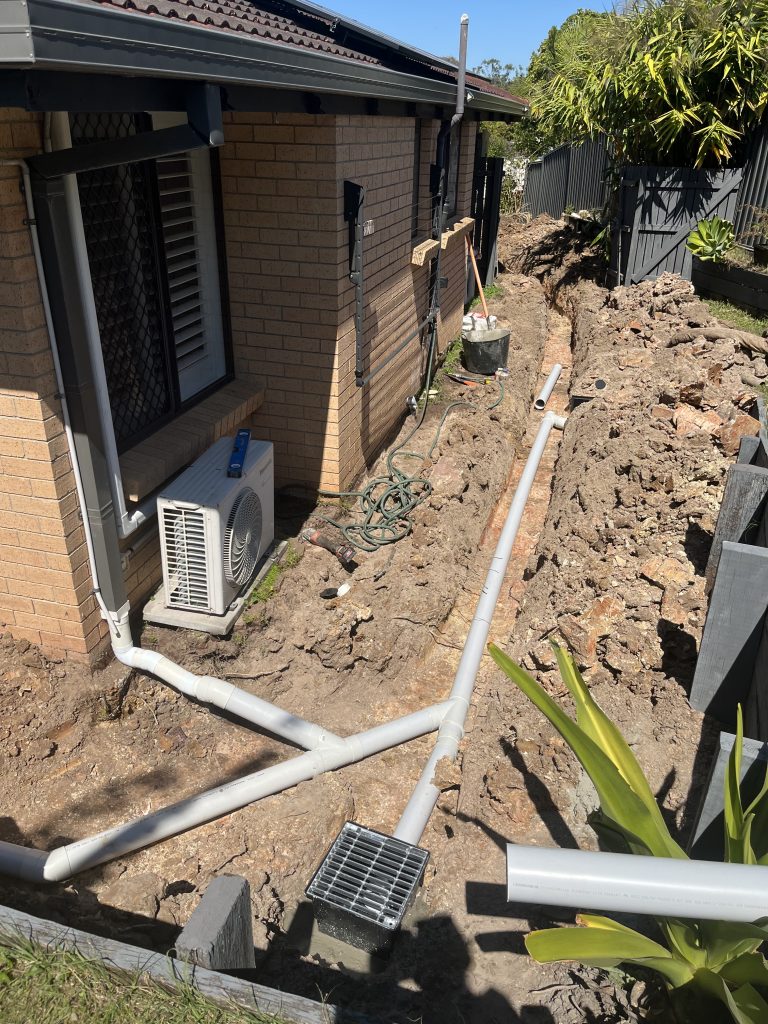
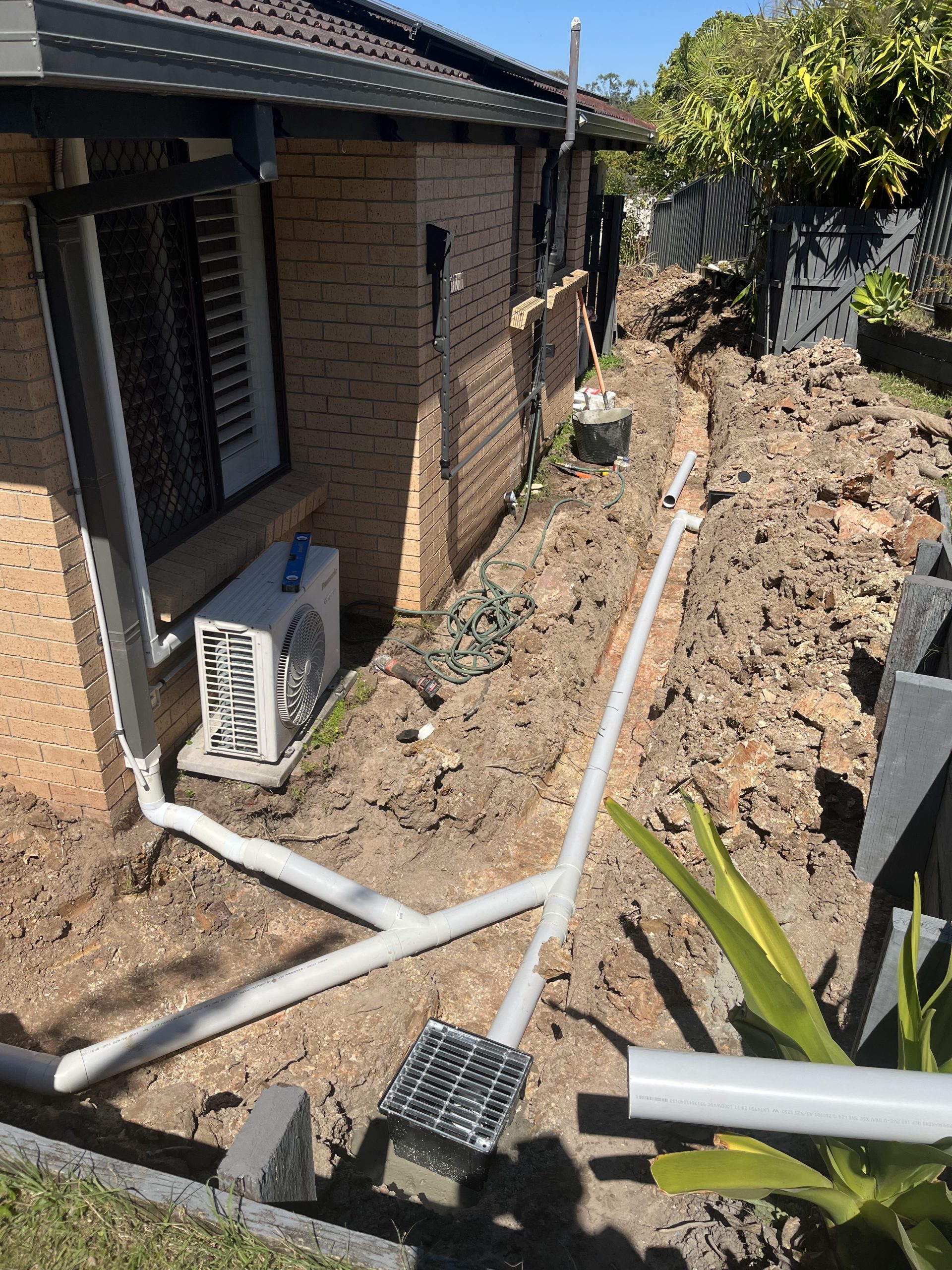
Fix was a full stormwater system upgrade around the property. Reshaping the ground with the earthmover to establish proper fall. New upgraded stormwater run all the way out to the street and the kerb.
Property is now set up for the summer storm season without the flooding.
That job is documented in more detail in our case study library.
What to do if you think you have this problem
If you’re seeing any of the signs above and you’re on a property that’s more than 10 or 15 years old, get a CCTV inspection done before the next big summer storm run. It’s the cheap, non-destructive way to know for certain.
If the inspection confirms 90mm and it’s already deformed, the honest recommendation will be to upgrade it, not chase blockages every rain event.
Same recommendation whether you’re in Labrador, Southport, Nerang, Robina, Coomera, Tweed Heads, Banora Point or Kingscliff. Coastal soil and heavy summer rainfall put every buried 90mm run under pressure.
Call for a diagnosis
We service the corridor from the Gold Coast through Tweed Heads to Byron Bay. If you’d like the line checked, we run CCTV inspections as part of every quote.
Call Matty on 0447 188 394, or use the online form. Same-day response, upfront pricing, written quote before we start any work.
Related reading:






)