By Matthew Baring-Gould, Kingscliff-based drainage plumber. Servicing Tweed Heads for 4 years. 5.0 stars across 173 Google reviews. Licensed NSW 383340C and QLD 15036450. ABN 74 605 392 348.
12 metre run of concrete stormwater pipe at a Tweed Heads holiday park, running from the main road to the lowest point of the park. Matted tree roots across the whole length and years of silt. Hydrojet cleared it, but the real fix is re-engineering the fall out to the easement.
What the park called us for
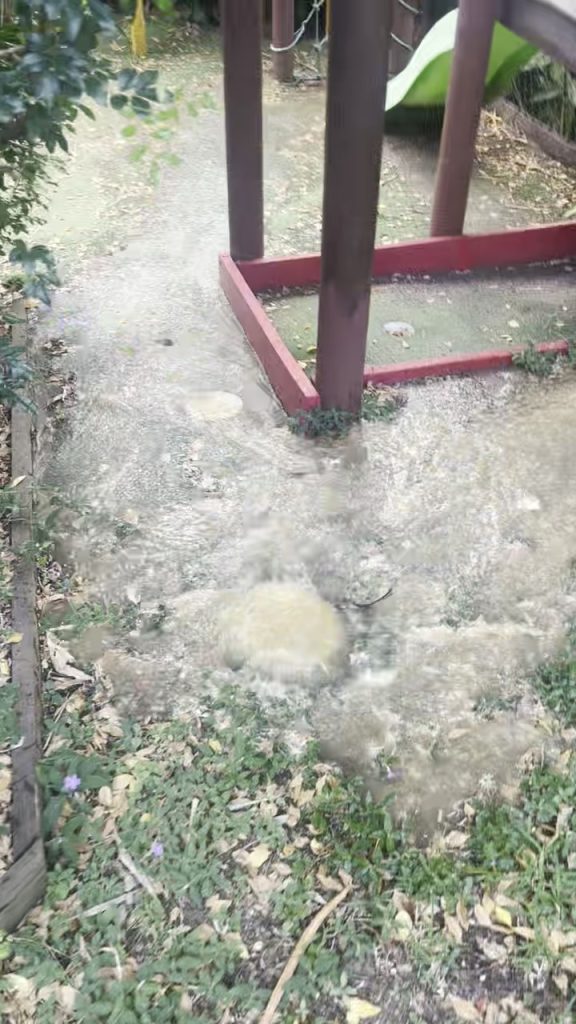
Water collecting and sitting around a specific section of the holiday park. The park sits at the low point and the main stormwater pipe runs the length of this stretch. Nothing was draining through properly. Guests were walking through water, and in heavy rain the area was fully flooded.
What we found when we got there
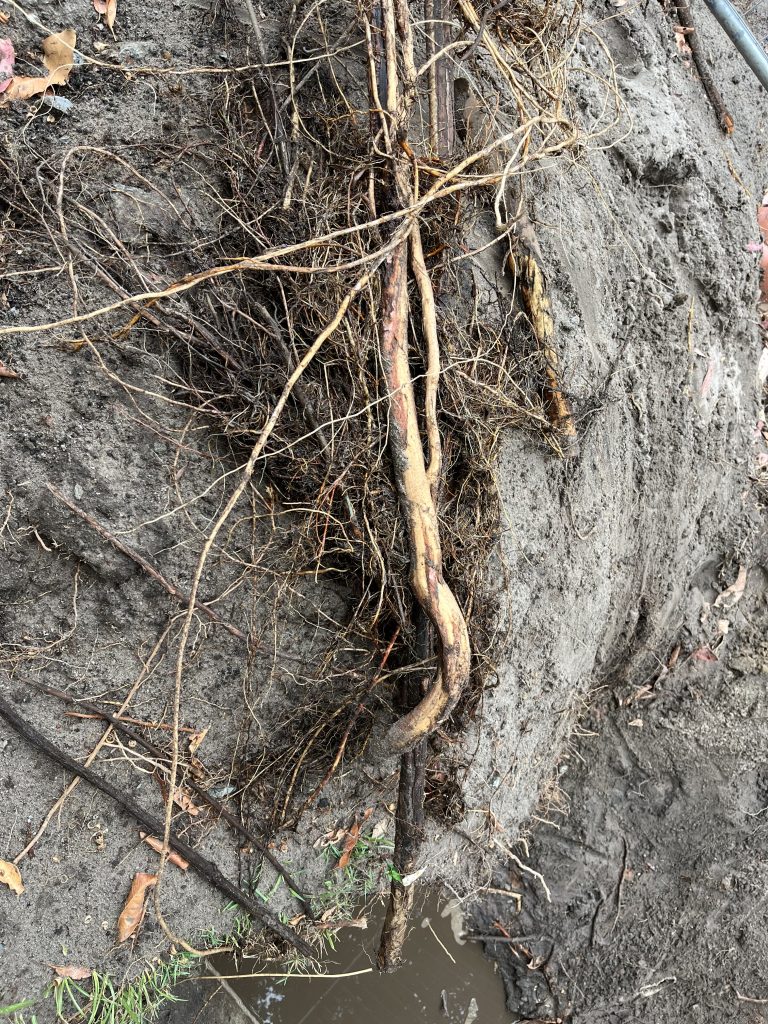
Concrete stormwater pipe, 12 metres long, full of tree roots. At the inlet end, the roots had grown through the concrete and formed a continuous mat down the length of the pipe. On top of that, years of silt had settled in the line because the fall is poor and water was sitting stagnant long enough for sediment to drop out of suspension. Over time the silt had formed a hard, cake-like layer that stormwater just ran over the top of.
Why we did it this way
Two problems, two tools. The roots had to come out physically; you cannot just push them further down the pipe because they will re-grow at the same spot. We used the hydrojet with a 3/4 inch end hose, which gives maximum flow and pressure through the cutting heads, so we could cut the root mat where it was bonded to the concrete. Once the roots were loose, we actually pulled a lot of the heavier roots out by hand, some of them were 50-cent-piece thickness, which is a serious lump of root. Then the silt pass to clear what the roots had been holding in.
What we did on site
- Opened the stormwater pipe at the inlet.
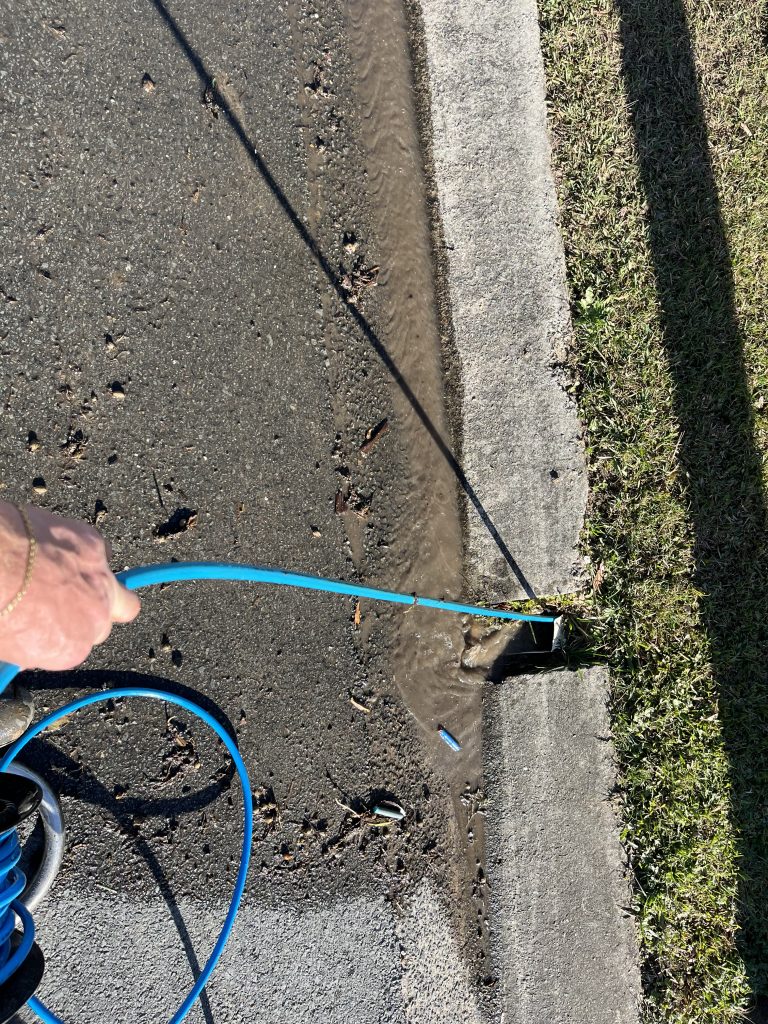
- Hydrojet with the 3/4 inch end hose and cutting head, running the length of the pipe to free the root mat from the concrete.
- Pulled the heavier root sections out by hand once they were loose.
- Second jet pass to flush out broken-up root material and loose silt.
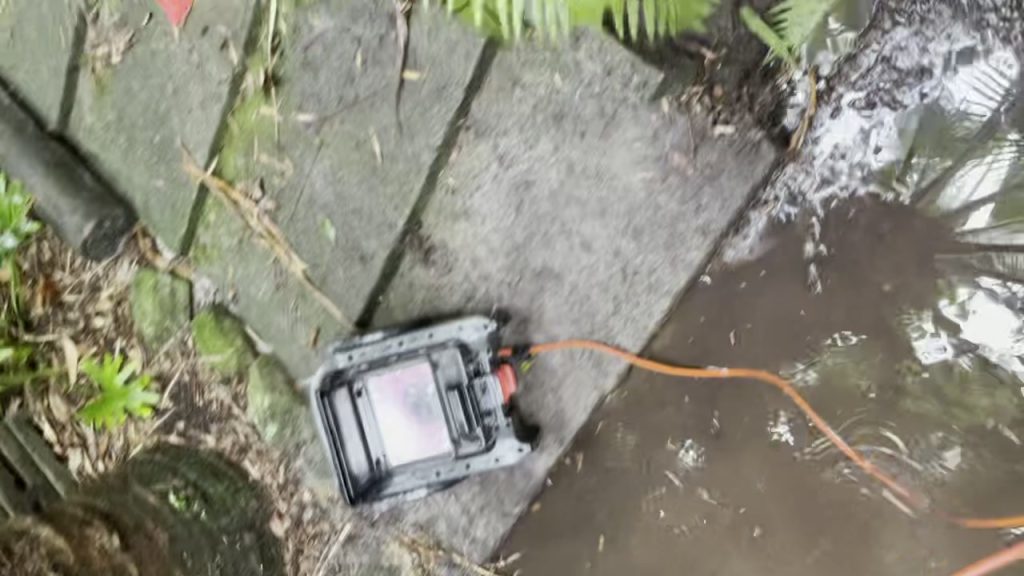
- Camera confirmed the roots were out. Silt further down the line is still restricting flow because the pipe fall is too shallow and the water backs up at the outlet with nowhere to go.
- Advised the park management: the long-term fix is to lay drain from here out to the easement so the stormwater has somewhere to actually go. Once that is done we will come back and clear the silt out of the full run.
The result
Line is clear of roots. The park has a drain that flows at the inlet end but still backs up at the outlet until the downstream extension is laid. Park management has committed to extending the drain out to the easement, and we will return to finish the silt removal once the water has somewhere to go. Also quoted on several other drains around the park as preventive maintenance.
If you look after a holiday park, caravan park or body corporate
Low-fall stormwater on a commercial property almost always ends up like this: slow-moving water drops silt, roots find the joins, the drain stops working, and by the time anyone notices the whole run needs a hydrojet + rework. Preventive maintenance (annual jet and camera) is dramatically cheaper than a dig-and-replace once the pipe has started to collapse. We cover commercial drainage across Tweed Heads, the Northern Rivers and the Gold Coast. Call Matty on 0447 188 394.
Customer names and addresses have been withheld. Individual results vary. Drain Masters Plumbing is licensed in NSW (383340C) and QLD (15036450).
Frequently asked
Why not just dig the pipe up?
Dig-and-replace is the right long-term fix if the pipe is structurally compromised. On this run the concrete pipe itself is still sound; the issue is roots, silt and a shallow fall. The owner chose a clear and re-engineer rather than full replacement.
How often should a holiday park / caravan park stormwater system be jetted?
Annually is a sensible rhythm for commercial sites with mature trees and surface traffic. If the park has had any flooding event, that is also a trigger to inspect before the next heavy rain season.
What is the 3/4 inch end hose and why does it matter?
The hose size at the business end of the hydrojetter determines flow and pressure at the cutting head. A 3/4 inch end hose carries much more water than a smaller line, which means more cutting force on hard roots. For a job this size you need it.
Browse all our case studies.
Residential, commercial, stormwater, sewer, drainage installs across Tweed Heads, the Northern Rivers, the Gold Coast and Brisbane. See the full collection →